
Blog ideas by industry / Roofing
Roofing blog topics for contractors
Most roofing searches start after something happens: a hailstorm, a stain on the ceiling, an insurance letter. The rest come from homeowners pricing a replacement they've put off for years. A roofing blog that wins jobs has posts ready for both.
Storm posts are also where roofers get into legal trouble. Several states bar contractors from promising to cover a deductible or from acting as the homeowner's adjuster, and website copy counts as advertising. The ideas below come with notes on how to write them so they stay on the right side of those rules.
20 topics in 4 groups, then the rules to check before you publish.
Written October 16, 2026 by Preston Vawdrey at Draftly.
After a storm
These readers are looking at their roof from the driveway. Tell them what to check from the ground, what to photograph, and when to call. Publish them before storm season so they're indexed when the hail hits.
- How to spot hail damage from the groundDented gutters, downspouts and vents, granules in the gutters. Say why nobody should climb up to check.
- What to do in the first 24 hours after a stormPhotos, a tarp if water is coming in, a call to the insurer. Keep the steps short and put your phone number near the top.
- Wind damage: missing shingles and what they let inCreased and lifted shingles, exposed nail heads. Explain why a small spot can turn into a ceiling stain.
- How to spot a storm chaserOut-of-state plates, pressure to sign the same day, an offer to cover the deductible. Link your state's consumer guide.
- Emergency tarping: when it's needed and what it costsYour real price, how fast you can get there, and that most policies expect you to prevent further damage.
Insurance claims, explained
Explain how claims work in general. Don't promise to negotiate with the insurer or get the homeowner paid, because some states treat that as acting as an unlicensed public adjuster.
- How a roof insurance claim works, step by stepClaim, adjuster visit, estimate, depreciation, final payment. Describe your part honestly: the inspection and the work.
- What recoverable depreciation means for your roofWhy the first check is smaller and what releases the rest.
- Why you have to pay your deductibleExplain the law in your state and link it. Readers who got a too-good offer will find this post.
- Repair or full replacement: how adjusters decideMatching shingles, how much of a slope is damaged, local code. Keep it general and say the insurer decides.
- What a roof inspection report should includePhotos of each slope, measurements, the damage you found. Show a real one with the address removed.
Planning a replacement
These readers are comparing quotes. Real price ranges, dated and specific to your market, keep them reading.
- What a roof replacement costs in your city this yearYour real range by roof size and material, the year, and what moves the price (tear-off layers, decking, pitch).
- Architectural shingles or metal roofingUpfront cost, lifespan, noise, and how each handles your weather.
- How long does an asphalt roof last here?Climate, ventilation and attic heat. Use what you see on local tear-offs.
- What's in a roofing estimate, line by lineUnderlayment, drip edge, flashing, ventilation, disposal. Explain why two bids differ.
- Manufacturer warranty or workmanship warrantyWhat each covers and who honors it. Name the warranties you actually offer.
- Do you need a permit to replace a roof in your city?Many cities require one. Link the permit page and say who pulls it.
Seasonal posts and local trust
Lower search volume, and they're what a homeowner reads right before calling you.
- Fall roof checklist before the first freezeGutters, flashing, attic ventilation. Time it for your region.
- Ice dams: why they form and how to prevent themAttic insulation and ventilation do more than heat cables. Skip this one if you work where it doesn't snow.
- How to check a roofer's license or registration in your stateLink the lookup if your state has one. Then show yours.
- A recent roof replacement, start to finishThe problem, what you found under the shingles, the cost and photos. Get the homeowner's OK and leave out the address.
Rules to check before you publish a roofing post
Storm and insurance posts are advertising. Here's what to check, with two states' rules as examples. Your state may have its own, so look them up before you rely on this list.
Never offer to cover the deductible
Colorado law says a roofing contractor paid from an insurance policy "shall not advertise or promise to pay, waive, or rebate" any part of the deductible. Texas bars contractors from offering to waive, rebate or absorb a deductible. Lines like "we'll work with your deductible" don't belong in a blog post.Source: Colorado C.R.S. 6-22-105, Texas Department of Insurance: roofing and insurance
Don't write like a public adjuster
Texas bars roofers from acting as a public adjuster on jobs they're doing or advertising that they will, and the state says websites count as advertising. Skip promises to negotiate the claim, speak for the homeowner on coverage, or get them "every dime" from the insurer.Source: Texas Department of Insurance: roofing and insurance
Retire the ENERGY STAR roof claims
EPA ended the ENERGY STAR program for roof products on June 1, 2022. If an old post calls a shingle ENERGY STAR certified, update it and use the Cool Roof Rating Council's directory for reflectance numbers instead.Source: Cool Roof Rating Council: ENERGY STAR roofing sunset
No federal tax credit for a new roof
The IRS page for the Energy Efficient Home Improvement Credit doesn't list roofs, and the credit covered property placed in service through 2025. Take down any post that says otherwise.Source: IRS: Energy Efficient Home Improvement Credit
Reviews have to be real
Since October 21, 2024, the FTC's rule on consumer reviews bans fake reviews and paying for reviews that have to be positive. Quote real customers, with permission.Source: FTC: Consumer Reviews and Testimonials Rule Q&A
This is a summary for planning posts, checked October 16, 2026. It isn't legal advice, and rules change, so confirm the current version at each source.
Writing roofing posts with Draftly
Draftly reads your website and sets your brand voice from it, so posts sound like your crew and your service area. Type a topic like "how to spot hail damage from the ground" and it writes the full post with a URL slug, meta title and meta description.
You add what only you have: your prices, your state's deductible rule and photos from real jobs. Then publish to WordPress, Shopify, Webflow, Ghost, Squarespace or HubSpot. Marketing agencies that run blogs for several roofers can add each client as its own website with its own voice.
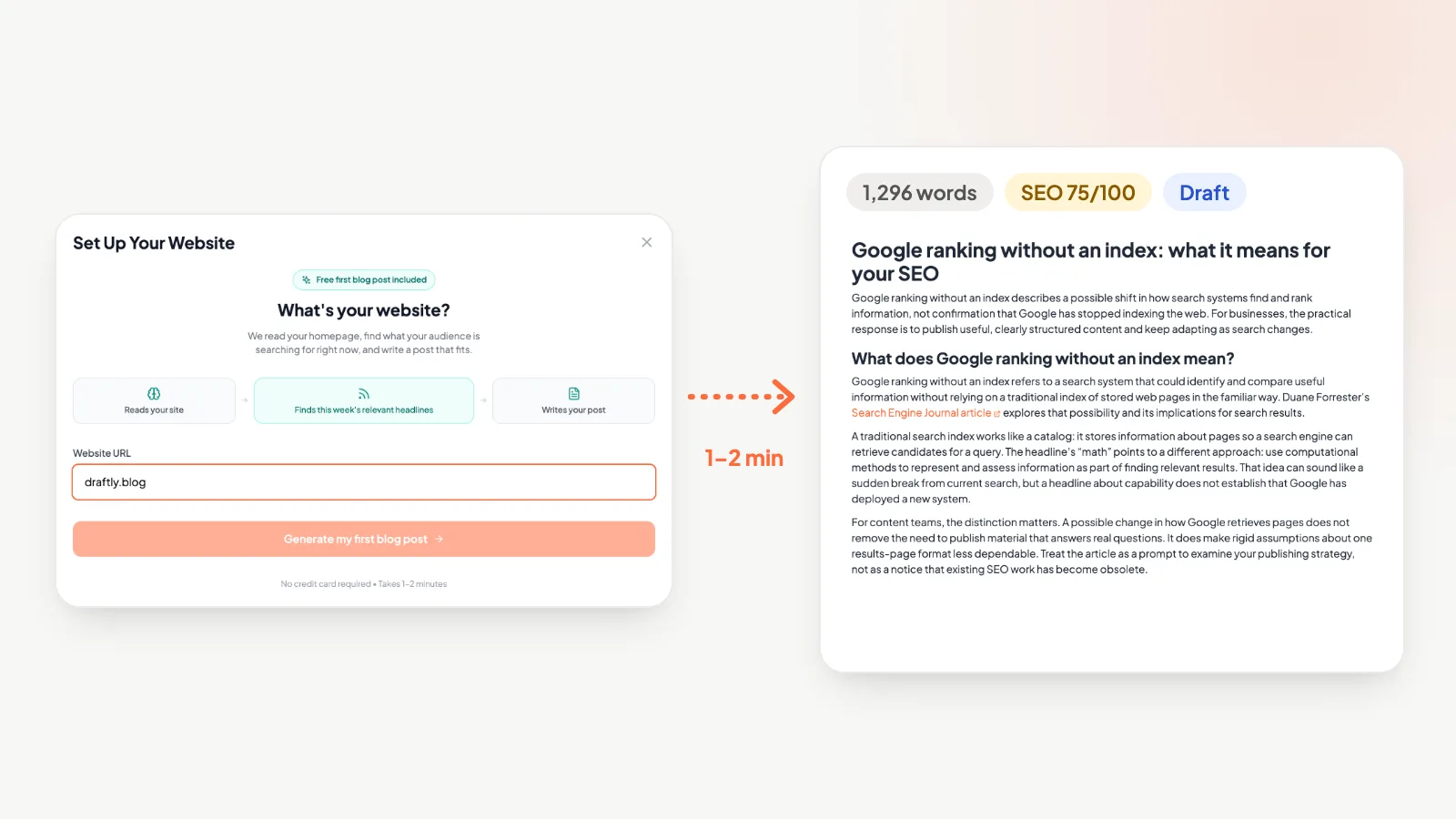
Before you write anything new, try the free blog ideas generator. Enter your website and it suggests 10 posts your customers would search for, skipping topics your blog already covers. The rest of the free tools are on the tools page.
Blog ideas for other industries
- Plumbing Blog Ideas: Topics Grouped by What Homeowners Need
- HVAC Blog Topics: Ideas for Heating and Cooling Companies
- Real Estate Blog Ideas for Agents, With Fair Housing Notes
- Legal Blog Writing: Topics and Ethics Rules for Law Firms
- Dental Blog Ideas: Topics Patients Search Before They Book
- Financial Advisor Blog Topics, With the SEC and FINRA Rules
- Accounting Blog Topics for CPA Firms, With the Ethics Rules
Keep reading
 GuideSEO copywriting rules we check on every postStructure, voice and call-to-action rules, with before and after examples.
 ComparisonBlog writing service or AI: what a post costsFreelancer, agency and Draftly prices per post, and when a human writer is still the better hire.
 Blog postAEO and GEO for small business blogs in 2026How to get your small business blog cited by ChatGPT, Claude and Google AI Overviews, based on Google's own guidance…
Frequently asked questions
What should a roofing company blog about?
Storm damage posts before storm season, plain explanations of how insurance claims work, replacement costs with your real prices, and material comparisons for your climate.
Can a roofer offer to pay the deductible in a blog post?
Not in states like Colorado and Texas, which bar contractors from offering to pay, waive or rebate a deductible. Check your own state's law before you mention deductibles at all.
When should roofers publish storm posts?
Four to six weeks before your hail or hurricane season, so they're indexed when the first storm hits.
Can AI write roofing blog posts?
It can write the draft. Someone at the company should add local prices, check every insurance and safety detail, and make sure nothing reads like a deductible offer before it goes live.