
Blog ideas by industry / Financial advisors
Financial advisor blog topics and the rules that apply
People rarely search for a financial advisor out of the blue. They search when something changes: an inheritance, a job offer with stock, a parent who needs care, a retirement date. An advisor's blog that brings in clients answers those moments in plain language.
Every post is also a regulated communication. Registered investment advisers answer to the SEC Marketing Rule, and broker-dealer reps answer to FINRA Rule 2210, which usually means a compliance review before anything goes live. The topics below are picked to be useful and to get through that review.
19 topics in 4 groups, then the rules to check before you publish.
Written October 16, 2026 by Preston Vawdrey at Draftly.
Life events
These are the searches that turn into first meetings. Walk through the decisions in order and skip product pitches.
- Just inherited money: what to do in the first 90 daysPark it, find out the tax treatment, then decide. Cover inherited IRAs separately.
- Selling your business: money questions to settle firstTaxes on the sale, what you'll live on, and who else is at the table.
- What to do with stock options from a new jobVesting, the kinds of options and the tax on each. No predictions about the stock.
- Money decisions in a divorceRetirement account splits, the house, and the order things happen in. Work with family law attorneys on this one.
- Planning for a parent's long-term careCosts where you practice, Medicare and Medicaid basics, and the conversation itself.
- Retiring in the next five years: a checklistIncome plan, Social Security timing, health coverage before Medicare.
Taxes and year-end
Clients search these every fall. Date them, link the IRS source, and update them each year.
- Required minimum distributions: when yours startSECURE 2.0 changed the starting age. Give the age by birth year and link the IRS page.
- Is a Roth conversion worth it this year?Tax bracket now versus later, and how to pay the tax. Walk through the reasoning and say who it tends to fit.
- Year-end money checklistContributions, RMDs, charitable gifts, flexible spending deadlines.
- Giving to charity from an IRAHow qualified charitable distributions work and who they fit.
- What the latest tax law changes mean for retireesName the law and link the IRS guidance. Keep it to what changed.
Choosing an advisor
Prospects read these right before they book a call. Be specific about how you work.
- Fee-only, fee-based or commission: what's the difference?Define each one and say which you are.
- What does fiduciary mean?Plain definition and how it applies to your firm.
- What to bring to a first meeting with usA real checklist. It lowers the bar to booking.
- How we charge, with an exampleYour actual fee schedule and what it means on a sample account.
- What a financial plan includesThe sections of the plan you deliver, with a redacted sample page.
When markets make news
Clients will ask after a big drop or a rate change. Explain what happened and what you're doing. Never predict what comes next.
- The market dropped. Here's how we think about itYour process, in your words. Leave out forecasts and performance claims.
- What a Fed rate change means for savers and borrowersCDs, mortgages, credit cards. Date the post.
- Cash, CDs or Treasuries for money you'll need soonThe tradeoffs and the risks, explained evenly.
Compliance rules for financial advisor blog posts
Which rules apply depends on how you're registered. Your compliance team or chief compliance officer has the final say. Use this list to prepare for their review.
SEC Marketing Rule basics (RIAs)
Since November 4, 2022, registered investment advisers have had to follow the SEC Marketing Rule. It bars untrue or misleading statements and unsubstantiated material claims, and benefits have to be discussed alongside fair treatment of material risks.Source: SEC: Marketing Rule small entity compliance guide
Testimonials and performance (RIAs)
Under the Marketing Rule, a testimonial or endorsement has to say clearly whether the person is a client and whether they were paid. Gross performance can appear only next to net performance. Most blog posts are easier to approve without either.Source: SEC: Marketing Rule small entity compliance guide
Principal approval first (broker-dealers)
Under FINRA Rule 2210, a communication sent or made available to more than 25 retail investors within 30 days is a retail communication, and a registered principal has to approve it before it's used. A public blog post qualifies. New member firms also file certain retail communications with FINRA 10 business days before first use for their first year.Source: FINRA Rule 2210
No predictions
FINRA Rule 2210 says communications may not predict or project performance or imply that past performance will recur, with narrow exceptions. Write about your process and the tradeoffs and leave out where the market is headed.Source: FINRA Rule 2210
AI drafts follow the same rules
FINRA's Regulatory Notice 24-09 (June 27, 2024) says Rule 2210's content standards apply whether a person or an AI tool wrote the communication. An AI draft goes through the same review as anything else.Source: FINRA Regulatory Notice 24-09
This is a summary for planning posts, checked October 16, 2026. It isn't legal advice, and rules change, so confirm the current version at each source.
Writing financial advisor posts with Draftly
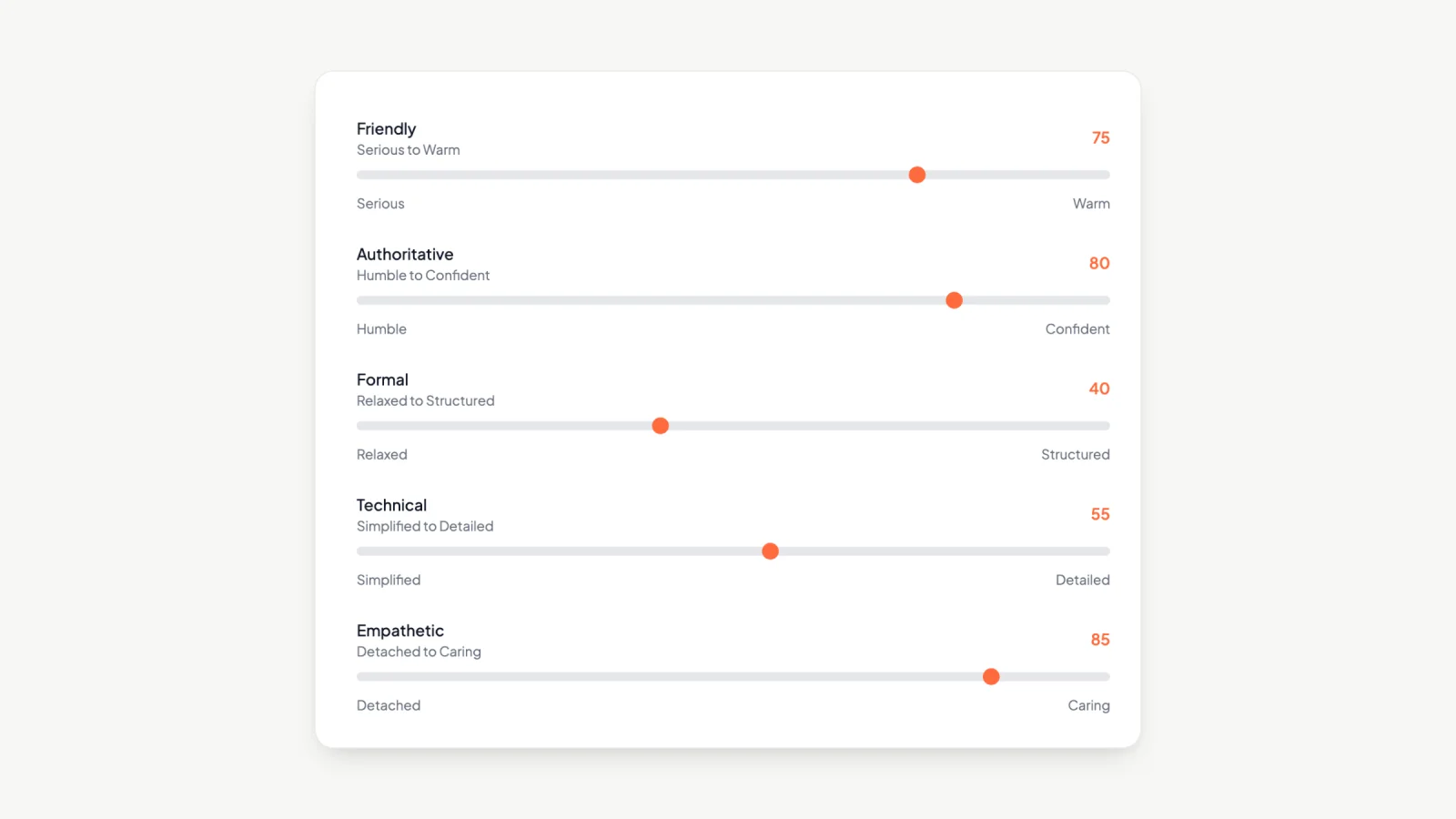
Draftly writes from your website and a topic, so it never needs client data. It sets your firm's voice from your site and drafts the post with a URL slug, meta title and meta description, checked for AI-sounding phrasing before you see it.
Your compliance reviewer approves the draft and keeps the record. Publish by hand to WordPress, Shopify, Webflow, Ghost, Squarespace or HubSpot instead of using Autopilot's automatic publishing, so nothing goes live before approval.
Before you write anything new, try the free E-E-A-T checker. Google holds money pages to a high bar for experience and trust, and the checker shows whether your posts carry bylines, author pages, dates and sources. The rest of the free tools are on the tools page.
Blog ideas for other industries
- Plumbing Blog Ideas: Topics Grouped by What Homeowners Need
- HVAC Blog Topics: Ideas for Heating and Cooling Companies
- Real Estate Blog Ideas for Agents, With Fair Housing Notes
- Legal Blog Writing: Topics and Ethics Rules for Law Firms
- Roofing Blog Topics: Ideas for Contractors, With Storm Rules
- Dental Blog Ideas: Topics Patients Search Before They Book
- Accounting Blog Topics for CPA Firms, With the Ethics Rules
Keep reading
 GuideSEO copywriting rules we check on every postStructure, voice and call-to-action rules, with before and after examples.
 ComparisonBlog writing service or AI: what a post costsFreelancer, agency and Draftly prices per post, and when a human writer is still the better hire.
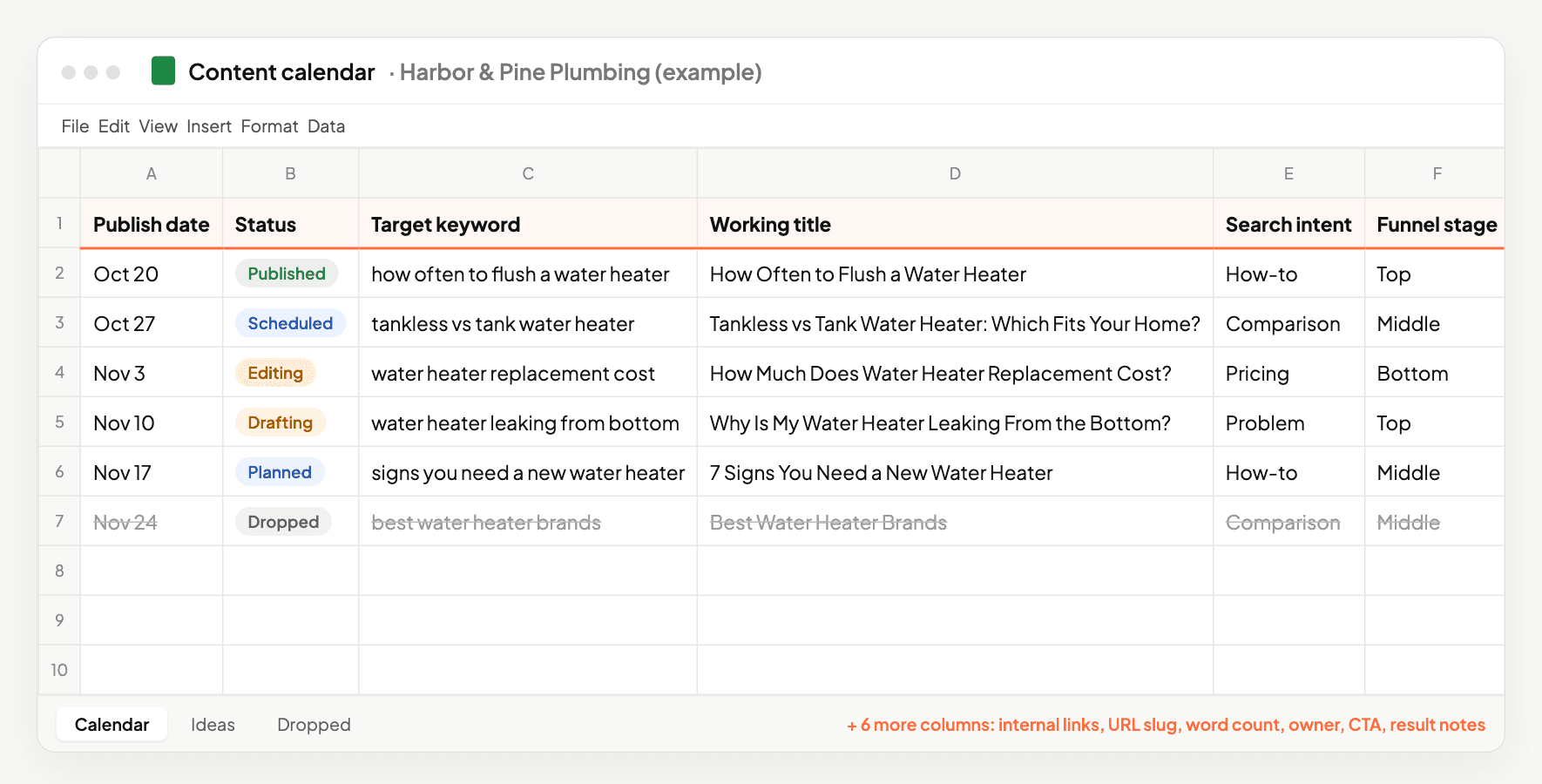 Blog postHow to Create a Content Calendar From a Blank Spreadsheet: 12 Columns That Actually MatterHow to create a content calendar in Google Sheets: the 12 columns worth keeping, how to map keywords to dates, a…
Frequently asked questions
What should a financial advisor blog about?
The life events that bring clients in, like inheritances, business sales and retirement, plus yearly tax topics and plain explanations of how you work and charge.
Do financial advisor blog posts need compliance approval?
For broker-dealer reps, FINRA Rule 2210 requires principal approval of retail communications before use, and a public blog post is one. RIAs follow the SEC Marketing Rule and their own compliance policies. Ask your compliance team.
Can financial advisors use AI to write blog posts?
Yes, with the same review as any other communication. FINRA Regulatory Notice 24-09 says Rule 2210's content standards apply whether or not AI wrote it.
Can I share client results or testimonials on my blog?
Only within the SEC Marketing Rule or FINRA's testimonial rules, which require specific disclosures. Many firms keep blog posts free of both to make approval simpler.